Ticks can't see you.
So how do they find your dog every single time?
A tick has no eyes, no ears, and no nose. Yet it can lock onto your dog from feet away, in the dark, in the tall grass. Here's the strange biology behind how it hunts — and the honest truth about whether anything can interrupt it.
See what we built ↓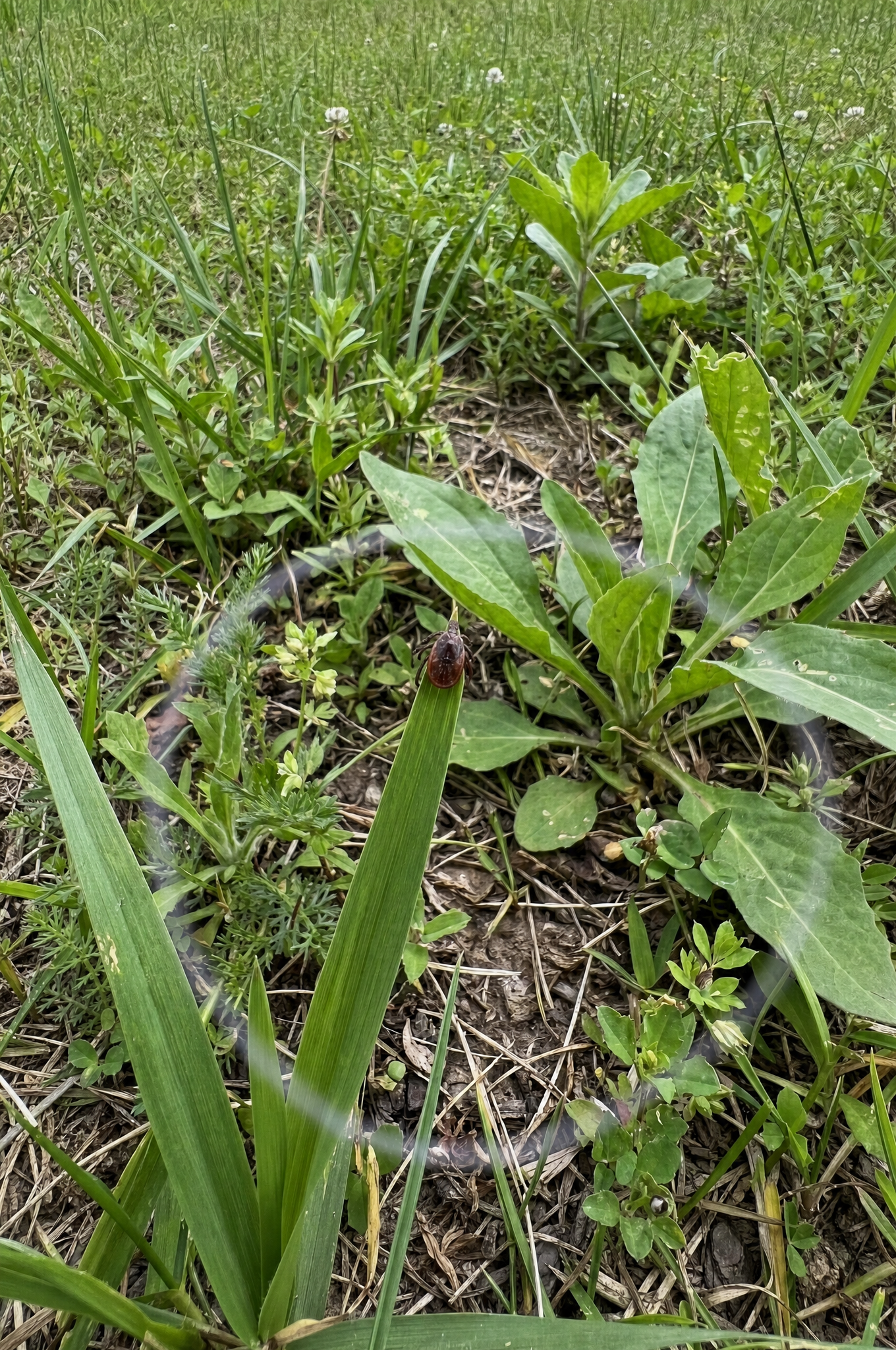
It's feeling for you.
Look closely at a tick on a blade of grass. It isn't sitting there by accident. It has climbed to the tip, anchored its back legs, and stretched its front legs out into the open air. It can hold that pose for hours — sometimes days — waiting.
This is called questing. And the tick isn't watching for you, because it can't. It has no eyes worth the name. What it's doing is reaching — front legs open like antennae, sampling the air for the signals that mean a warm-blooded animal is about to brush past.
A questing tick at the tip of a grass blade — front legs out, waiting to grab hold.
One tiny organ does all the hunting.
Everything a tick needs to find you sits in a microscopic pit on its front legs. It's called the Haller's organ — a cluster of sensory hairs and receptors packed into a hole smaller than a grain of sand. Under an electron microscope, it looks like a control panel built for one job: detecting animals.
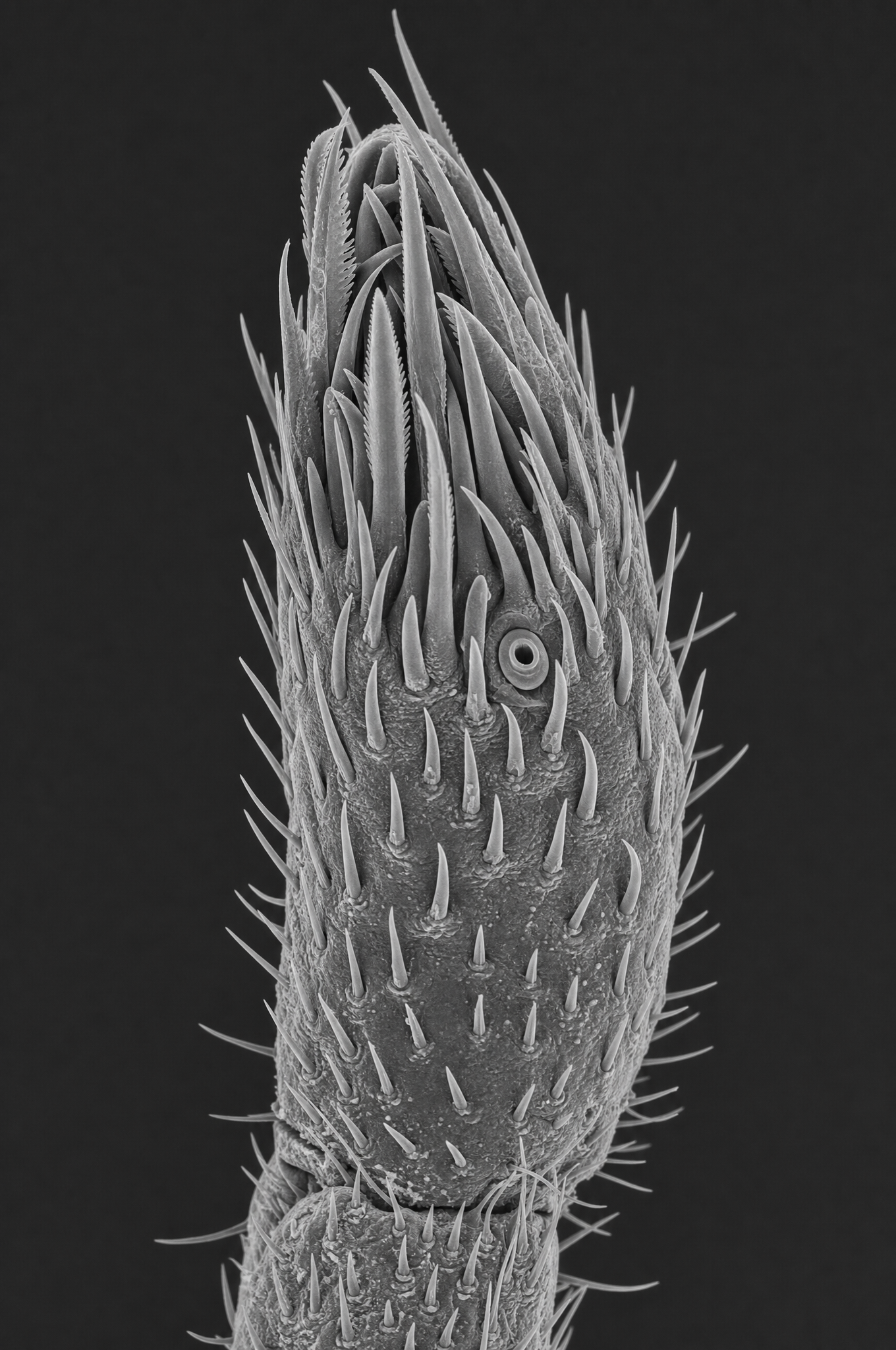
The tip of a tick's front leg. The small round pit is the Haller's organ — its entire hunting kit.
Three signals feed that organ, all at once:
When those three signals stack up together, the tick knows a host is close — and it commits. It shifts to the tip of the blade, opens its legs, and waits to grab. The whole decision takes seconds.
Low, warm, and always moving.
If a tick were designing its ideal victim, it would draw your dog. She's low to the ground — right at questing height. She's warm. She's breathing hard from the walk, pumping out CO₂. And she brushes against hundreds of grass blades a minute, hitting every ambush point in the field.
Now do the math on a daily walk near woods or long grass. Every outing is thousands of tiny sensors switched on and reaching as she passes. It only takes one to get a grip.

Tall grass along a trail edge — prime questing territory on an ordinary walk.
The honest scorecard.
So what actually keeps ticks off? Here's the straight version — including where we're supposed to oversell, and won't.
Sprays & DEET
They do repel ticks. They also mean a chemical smell, something on your dog's coat and your kids' skin, and reapplying every couple of hours or it stops working.
Spot-ons & oral preventatives
Effective for many dogs. But it's a monthly chemical dose, and some dogs react badly to it — a real reason a lot of owners come looking for something else.
“Ultrasonic” devices
Here's where we're supposed to tell you ultrasonic gadgets are magic. We won't. The lab evidence for older devices is genuinely mixed, and anyone quoting “94% effective” is quoting a study that doesn't hold up.
Because the target is real.
Older ultrasonic gadgets picked a single frequency and hoped. But the thing they were aiming at — that Haller's organ — is very real, and it's the exact moment a tick decides whether to climb on. Its greatest strength, how sensitive it is, is also its weakness. Flood it, and the sensor it uses to find a host becomes the sensor that turns it away.
That's what the Wildward Pulse is built to do. It emits a silent, shifting ultrasonic pulse — 19 to 135 kHz — across the range that overwhelms that sensing. You, your kids, and your dog never hear a thing. To a questing tick, it's noise it can't hunt through, so it's far less likely to climb on in the first place.
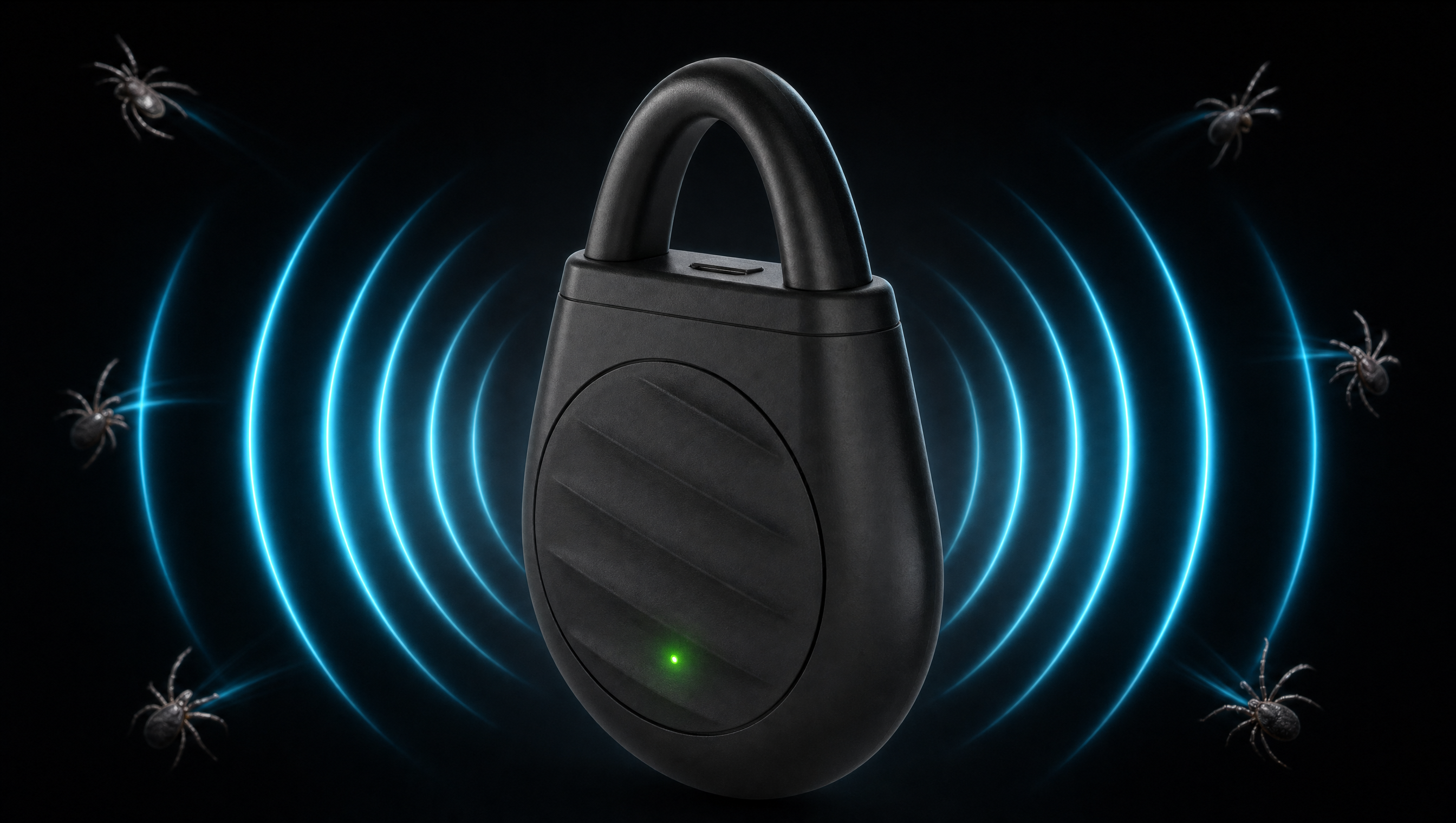
A shifting 19–135 kHz pulse across the range ticks sense in — silent to you, overwhelming to them.
It's a layer, not a force field. That's exactly why we back it with a 30-day guarantee — try it for a season of walks, and if you don't want it, send it back.
Watch ticks move away in a live dish test.
We put live ticks in a dish next to a running Wildward Pulse and filmed what happened. No edits, no cuts — just the pulse doing exactly what the biology predicts.
Live dish demo — full clip dropping soon. Use alongside your normal tick checks.
A silent clip-on. That's the whole thing.
No collar to replace. No spray to rub in. No monthly dose. You charge it, clip it on, and head outside.
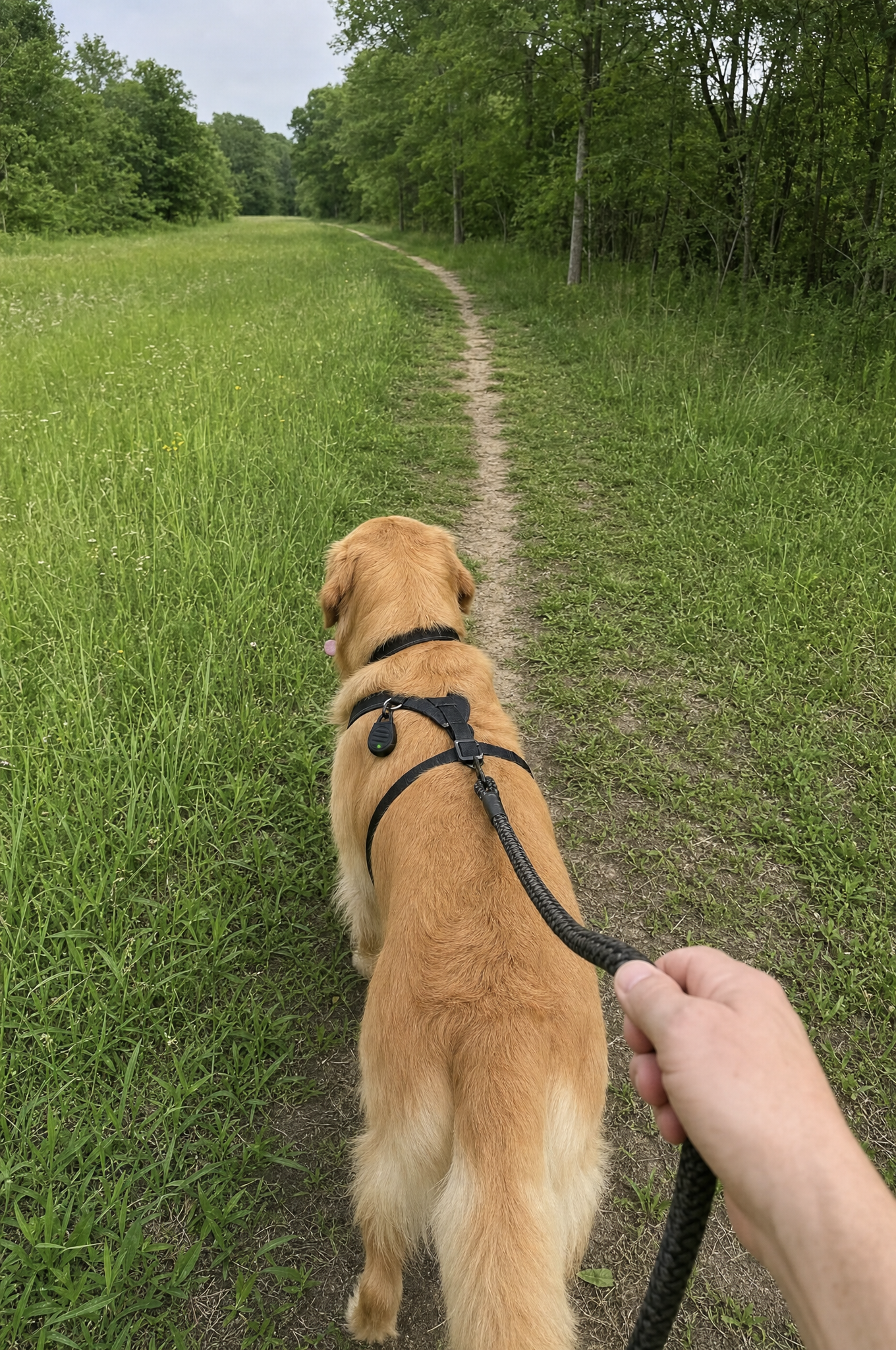
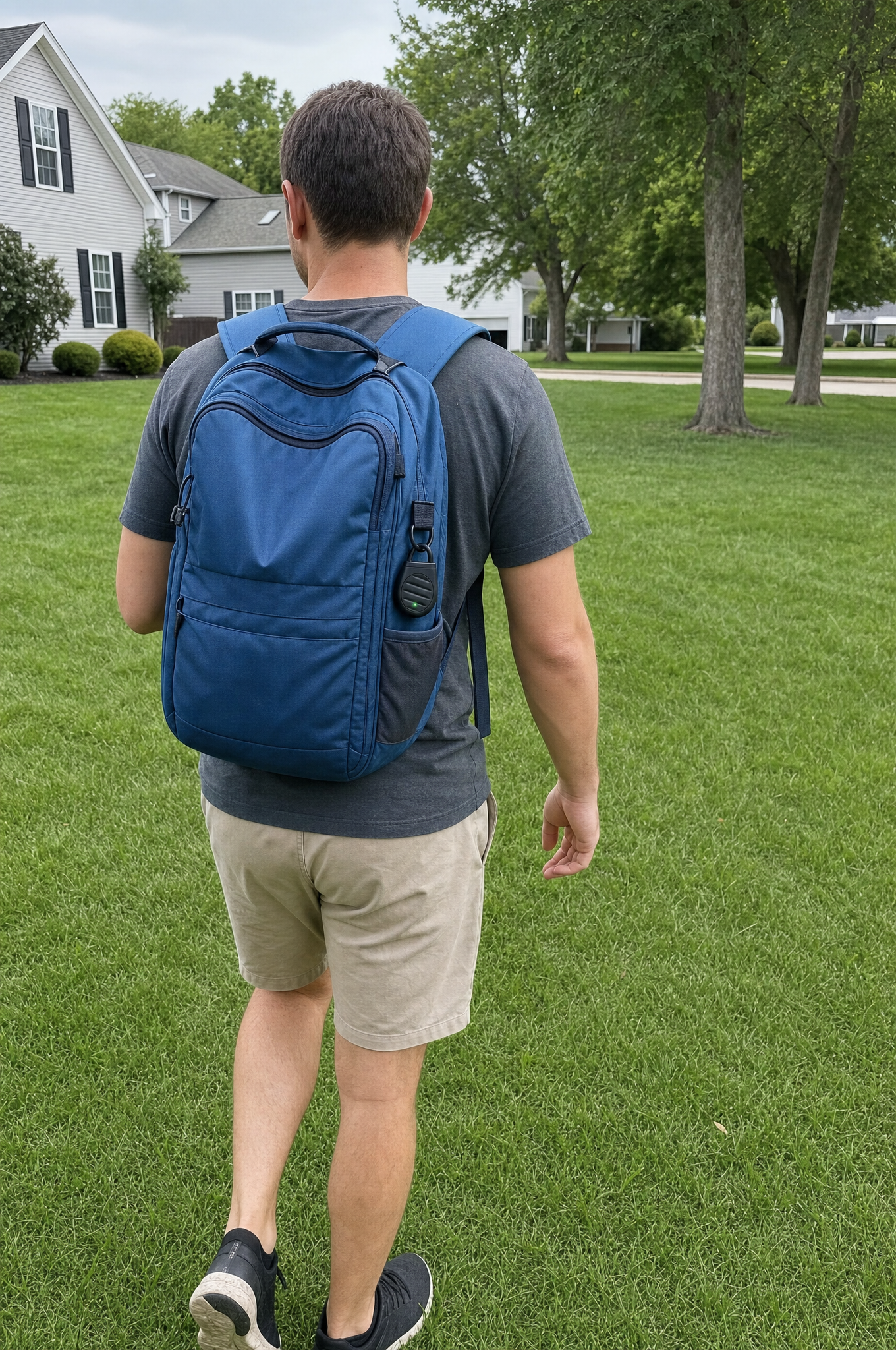
Clips to a backpack strap, a belt loop, or a collar. Green light means it's working.
100% chemical-free
Nothing goes on skin, fur, or clothes. No smell, no residue, no reapplying.
Clips anywhere
Collar, belt loop, backpack strap, or zipper pull. One device covers whoever wears it.
USB-C rechargeable
2–4 days per charge, then top it up like your phone. Reusable for years — no batteries in a landfill.
Silent & hands-free
You'll never hear it and neither will your dog. Clip it once and forget it's there.
Loved by dogs & the people who walk them.
★★★★★ 4.8/5 · based on 1,200+ reviews
Finally a tick season without the panic
We do daily walks by the woods and I used to check Bailey every single night. Clipped this to her collar in May and we just… haven't been finding them.
Came back from 3 days backpacking clean
Clipped one to my pack strap and one to the dog on a trail that's notorious for ticks. Normally I'd pull a few off both of us. This trip, nothing.
Skeptic here — won me over
Bought it expecting to return it. Four weeks in and I haven't found a single tick on Cooper, where last year I was pulling them weekly. It works.
Keep doing your tick checks.
We'll always tell you that. The Wildward Pulse is one more layer between your dog and the ambush — not a replacement for a hands-on check after a walk in heavy-tick country. Anyone who tells you a gadget makes tick checks optional is selling you something. We'd rather keep you.
Chemical-free, silent, and backed by a real 30-day guarantee — so there's genuinely no downside to trying it for a season.
Cover the whole household.
Most families protect everyone who heads outside — the dog, the kids, and themselves. Pick a pack. Free shipping on every order.
↩ 30-day money-back guarantee · Ships in 1–2 days · Silent, chemical-free
The 30-day promise. Try it for a full season of walks. If you don't love it, send it back for a full refund — and keep doing your tick checks either way.
Before you clip it on.
Do ultrasonic tick repellers actually work?
The Wildward Pulse is designed to make ticks less likely to climb on by flooding the sensing organ they use to find a host with a shifting 19–135 kHz pulse. We're honest that it's a chemical-free added layer, best used alongside your normal tick checks — especially in heavy-tick areas. Not happy? You've got 30 days to send it back.
Is it safe for my dog and my kids?
Yes. No chemicals, sprays, or residues — nothing goes on skin or fur, and the pulse is silent to people and pets. Clip it to a collar, belt, or bag.
How long does the battery last?
2–4 days on a single USB-C charge, depending on use. The green light shows it's running, and it's rechargeable and reusable for years.
How do I wear it?
It hangs from a built-in loop — clip it to a dog collar, belt loop, backpack strap, or zipper. One device covers whoever's wearing it.
What's the guarantee?
Every Wildward Pulse is backed by a 30-day money-back guarantee. If it's not for you, reach out for a full refund.